
Design was
happening.
Nobody was
in the same room.
Researchers, teachers, agency designers and self-taught practitioners were all working on the same questions in different cities, with no shared stage, no record of the work, and no way for a student to find any of it.
Build the room.
Keep it open.
Write down
what happens.
A national design conference, free of a commercial owner, with students on the organising side and the whole archive left online afterwards. Ten years later that is still the entire brief.
Origin
LUMS
2016 — 17
It started in a research lab,
not a boardroom
In 2016 the design outreach that became UX Pakistan began inside CHISEL, the Computer Human Interaction and Social Experience Lab at LUMS, directed by Dr. Suleman Shahid. The lab's own work sat at the intersection of design, technology and inclusion — assistive and learning technologies for people at the margins in the global south.
In January 2017, INDEX — The Design & Innovation Society — was established at LUMS by a handful of students who had been working in that lab. UX Pakistan launched the same year as a not-for-profit, student-run conference under that society, and the first edition took place on campus.
That is the reason this conference behaves the way it does. It came out of a place where you are expected to state your question, do the work, and publish what you found.
Design outreach begins at CHISEL, LUMS
INDEX, the Design & Innovation Society, is founded
The first UX Pakistan takes place at LUMS
Ten years on, the tenth edition
Position
Why · Where
What
To give design in Pakistan a place to be taken seriously
Not as decoration or a service line, but as a discipline with research behind it and consequences attached — in public services, education, healthcare and everyday products.
A country where good design is the default, not the exception
Where a hospital form, a government portal and a school app are all designed with the people who use them, by practitioners trained here.
Convene the community once a year and leave the record open
Bring practitioners, researchers, students and institutions into one room, keep it affordable, and publish everything that comes out of it.
Method
Five steps
Repeated
How we do it
Programme
What runs
each year
What actually happens
Main stage talks
Two days of talks from practitioners, researchers and teachers — local work first, international perspective alongside it.
Hands-on workshops
Small-group sessions where people leave with a method they can use on Monday, not a slide deck.
Panels and hard conversations
The unresolved arguments: design education, pay, research budgets, who gets hired and who gets left out.
Student track and access
Places held for students and educators from across the country, kept affordable on purpose.
Support
CHISEL
2016 — now
CHISEL @ LUMS
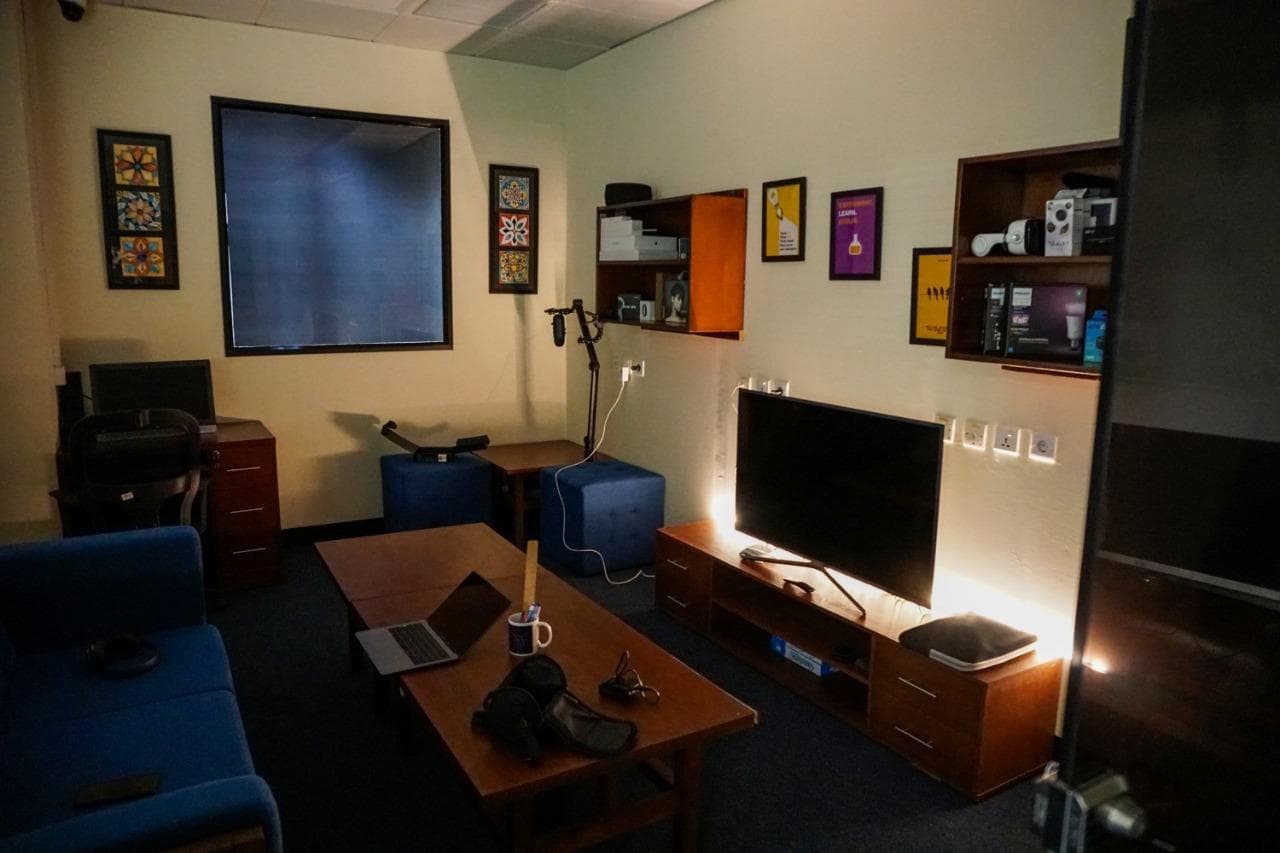
CHISEL — the Computer Human Interaction and Social Experience Lab in the Computer Science department at LUMS — is where this conference was born, and it has backed every edition since. Directed by Dr. Suleman Shahid, the lab describes itself as a hub for inclusive and participatory design, working on learning and healthcare technologies for people at the margins in the global south.
Across ten years that support has been practical: research students who became organisers, a usability lab that gave the conference credibility with industry, campus space for the early editions, and a standing argument that design work here should be studied and documented, not just shipped.
Where the idea came from
The outreach that became UX Pakistan started as lab activity in 2016, before there was a conference to name.
The people
Research students and lab designers who organised the first editions, and kept organising after they graduated.
The usability lab
A working research facility that gave the conference standing with industry and government partners.
The argument
That design in the global south needs its own evidence, made here, published here.
Rules
Non-
negotiable
Four things we don't trade
Non-profit
No commercial owner. Revenue goes into the next edition and into student access.
Student-run
Organised by students and volunteers, with the same handover every year.
Local first
The stage belongs to work being done in Pakistan before anything else.
Open record
Every edition stays online. Nothing gets quietly deleted.
Then
and
now
What changed, line by line
One campus, one hall
Editions across cities, and online when we had to be
A student society with five founders
A national community and a ten-year archive
No design conference in the country
Design programmes, and teams hiring designers locally
Speakers you had to convince
Speakers who ask to come
Ten years of speakers, panellists and workshop leads.
Volunteers, hosts, sponsors and partners behind each edition.
Ten years in, same brief
The tenth edition is being planned now. One mail when tickets and the call for talks open.